Business & Society 14th edition Discussion Case: Chiquita Brands: Ethical Responsibility or I...

Business & Society 14th edition

Discussion Case:

Chiquita Brands:

Ethical Responsibility

or Illegal Action?

In the early 2000s, Chiquita Brands International, a Cincinnati–based multinational mar-

keter and distributor of food products—widely known for its Chiquita banana brand—

found itself in the middle of a crisis in its Latin American operations. The company was

confronted by a local armed paramilitary group, the United Defense Forces of Colombia,

which attempted to extort substantial payments from the company to help fund the group’s

operations. The paramilitary group made it clear that if the company did not make the pay-

ments Chiquita’s employees would be at risk. The company’s managers took these threats

seriously, because they believed that, in 1995, the paramilitary group had been responsible

for bombing Chiquita’s operations and murdering 17 banana workers, who had been

gunned down on a muddy soccer field.

Chiquita’s mission emphasized a strong sense of ethical performance and social respon-

sibility. It stated that it wanted “to help the world’s consumers broaden mindsets about nutri-

tion and bring healthy, nutritious, and convenient foods that taste great and improve people’s

lives.” Therefore, it was not surprising that Chiquita’s management also wanted to protect its

employees and ensure their safety while working for the company. In a handwritten note, a

Chiquita executive said that such payments were the “cost of doing business in Colombia.”

The company agreed to make the payments demanded by the paramilitary group, but hid the

payments through a series of questionable accounting actions. From 1997 through 2004

Chiquita paid monthly “protection payments” totaling more than $1.7 million.

After the September 11, 2001, terrorist attack in the United States, the U.S. Government

declared the Colombian paramilitary group to be a terrorist organization. In February 2003, a

Chiquita employee informed a senior Chiquita officer that the company’s protection pay-

ments were illegal under the new U.S. terrorism laws. Chiquita officials met with their attor-

neys in Washington, DC, and were advised to stop the payments to the terrorist group. Yet the

company continued to make the protection payments, amounting to an additional $825,000.

In the minds of the Chiquita’s executives, stopping the payments would risk the lives of

their employees. Chiquita’s executives also considered but rejected the option of withdraw-

ing operations from Colombia. But in a surprising move in April 2003, Chiquita decided to

disclose to the Department of Justice that the company was still making payments to the

Colombian paramilitary group. The company told the government that the payments were

made under the threat of violence against them and their employees.

The Justice Department informed Chiquita that these payments were illegal, yet the

company continued to make the payments. In 2007 Chiquita Brands International pleaded

guilty to one count of the criminal charge of engaging in transactions with a designated

global terrorist group and agreed to pay a $25 million fine.

Chiquita’s troubles did not end when it settled the charges filed by the Justice Depart-

ment. In 2007, new lawsuits were filed under the Alien Tort Statute, a 222-year-old law that

allows foreigners to sue a U.S.–based company in American federal courts if their claims

involve violations of U.S. treaties. The lawsuit claimed that Chiquita was responsible for

the deaths of 393 victims at the hands of the Colombian terrorist group that Chiquita

funded through their payments and demanded damages of $20 million per victim, a total of

$7.86 billion. The lawsuits pointed specifically to a 1997 massacre in which 49 people

were tortured, dismembered, and decapitated and another incident in 2000 in which 36

more people were killed. “The principle upon which this lawsuit is brought is that when

you put money into the hands of terrorists, when you put guns into the hands of terrorists,

then you are legally responsible for the atrocities, the murders and the tortures that those

terrorists commit,” said attorney Jonathan Reiter.

Additional lawsuits were filed in 2011, where the names of 4,000 victims were submitted,

each targeting Chiquita due to the company’s support of the Colombian terrorist paramilitary

group. Attorney Terry Collingsworth, who helped file the lawsuits on behalf of the Colombians,

said, “A company that pays a terrorist organization that kills thousands of people should get

the capital punishment of civil liability and be put out of business by punitive damages.”

A Chiquita spokesperson responded, “We reiterate that Chiquita and its employees were

victims and that the actions taken by the company were always motivated to protect the

lives of our employees and their families.” Michael Mitchell, Chiquita’s director of com-

munications added, “Our company had been forced to make protection payments to safe-

guard our workforce. It is absolutely untrue for anyone to suggest that these payments were

made for any other purpose. Chiquita has already been the victim of extortion in Colombia.

We will not allow ourselves to become extortion victims in the United States.”

Please Answer Discussion question 1

1. Should Chiquita have agreed to make the payments to the terrorist group to protect its

employees? What ethical principles support your opinion?
Solved
Supply Chain Management/Operations Management 1 Answer Lulu Almarri

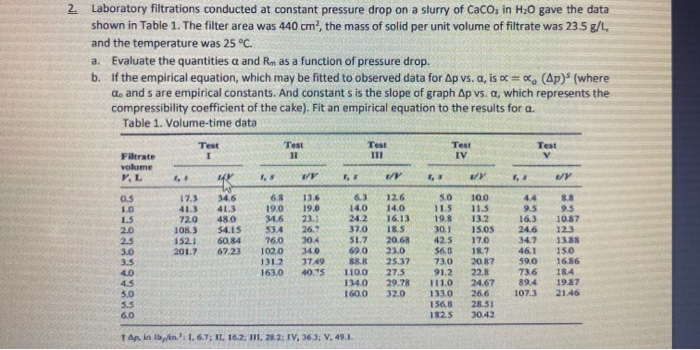
2. Laboratory filtrations conducted at constant pressure drop on a slurry of Caco, in H20 gave th...


2. Laboratory filtrations conducted at constant pressure drop on a slurry of Caco, in H20 gave the data shown in Table 1. The


maybe you can use excel

Solved
Chemical Engineering 1 Answer Josh Deller

COST ACCOUNTING PLEASE SOLVE ALL WITH COMPUTATIONS. Snider Company produces and sells two p...

COST ACCOUNTING

PLEASE SOLVE ALL WITH COMPUTATIONS.

Snider Company produces and sells two products: A and B in the ratio of 3A to 5B. Selling
prices for A and B are, respectively, $1,200 and $240; respective variable costs are $480
and $160. The company's fixed costs are $1,800,000 per year.
Compute the volume of sales in units of each product needed to:
Required:
a. break even.
b. earn $800,000 of income before income taxes.
c. earn $800,000 of income after income taxes, assuming a 30
percent tax rate.
d. earn 12 percent on sales revenue in before-tax income.

e. earn 12 percent on sales revenue in after-tax income, assuming a
30 percent tax rate.

Solved
ACCOUNTING 1 Answer ECS022_ ISHIKA CHAKRABORTY

A Leading mobile phone manufacturer is about to introduce a new series, initially, they are launc...

A Leading mobile phone manufacturer is about to introduce a new series, initially, they are launching 4 models of the same series. The accompanying table summarizes price and variable costs data, combined fixed costs equal $540,000.

Models

Infinity A Pro Max

Infinity A Pro

Infinity A

Infinity A Lite

Selling Price (in dollars)

500

400

340

220

Material Cost /unit (in dollars)

220

190

150

90

Labor Cost/unit (in dollars)

90

65

65

50

Table 1

  1. Develop a joint total revenue function for sales of the four different models.
  2. Develop an annual total cost function for manufacturing the four models.
  3. Develop the profit function for sales of the four models.
  4. Calculate the annual profit if the firm sells 9000, 12000, 45000 and 22000 units, respectively, of the four models?

Part – B:

In manufacturing medical equipment, a firm incurs costs of two types. Fixed annual costs of $ 155,000 are incurred regardless of the number of units produced. In addition, each unit produced costs the firm $5. If C equals total annual cost in dollars and x equals the number of units produced during a year;

  1. Develop the function C = f(x) which expresses annual cost.
  2. Calculate f(280,000)? What does f(280,000) represent?
  3. State the restricted domain and restricted range of the function if maximum production capacity is 850,000 units per year

    Question No. 5:

    Part – A:   

    A corporate agricultural organization has three separate farms which are to be used during the coming year. Each farm has unique characteristics which make it most suitable for raising one crop only. Table below indicates the crop selected for each farm, the annual cost of planting 1 acre of the crop, the expected revenue to be derived from each acre, and the fixed costs associated with operating each farm. In addition to the fixed costs associated with operating each farm, there are annual fixed costs of $75,000 for the corporation as a whole.

    Farm

    Crop

    Cost/Acre (cj)

    Revenue/Acre (rj)

    Fixed Cost (Fj)

    1

    Soya beans

    $900

    $1,300

    $150,000

    2

    Corn

    $1,100

    $1,650

    $175,000

    3

    Potatoes

    $750

    $1,200

    $125,000

    Table 2

  4. Determine the profit function for the three-farm operation.
  5. What are the expected profits for the program if the board of directors has voted on the following planting program for the coming year; 1,000 acres will be planted at farm 1, 1,600 at farm 2 and 1,550 at farm 3?
  6. A Summer drought has resulted in the revenue yields per acre being reduced by 20, 30 and 10 percent, respectively, at the three farms. What is the profit expected from the mentioned planting program?

    Part – B:   

    Given,fa,b,c,d=3a2b+bc-2ad2, Evaluate f-2,2,-4,-3 and f2,3,4,5

    Part – C:

    The function q = 230,000 -28p is a demand function which expresses the quantity demanded of a product q as a function of the price charged for the product p, stated in dollars. Determine the restricted Domain and Range of the function.

Solved
STATISTICS 1 Answer TANVEER AHMED

Problem I A 440-V 50-Hz two-pole Y-connected induction motor is rated at 75 kW. The equivalent ci...


Problem I A 440-V 50-Hz two-pole Y-connected induction motor is rated at 75 kW. The equivalent circuit parameters are R1 0.075 ? R2:0.065 ? XM 7.2 ? Xi 0.17? X2 0.17? P FAW 1.0 kW For a slip of 0.04, find (a) The line current I (b) The stator power factor (c) The rotor power factor (d) The stator copper losses Psc (e) The air-gap power PA (1) The power converted from electrical to mechanical form Pm (g) The induced torque td (h) The load torque (i) The overall machine efficiency ? ) The motor speed in revolutions per minute and radians per second Pie 150 w Puee = 1.1 kW

Solved
Power 1 Answer Tracy Faye Robles

Use the table from Bloomberg at the bottom of the page to calculate each of the following: Pr...

Use the table from Bloomberg at the bottom of the page to calculate each of the following:

Problem 5.8: Bloomberg Cross Rates

Currency

USD

EUR

JPY

GBP

CHF

CAD

AUD

HKD

HKD

  7.7736

10.2976

0.0928

12.2853

7.9165

7.6987

7.6584

AUD

1.015

1.3446

0.0121

  1.6042

1.0337

1.0053

0.1306

CAD

  1.0097

1.3376

0.0121

  1.5958

1.0283

0.9948

0.1299

CHF

  0.9819

1.3008

0.0117

  1.5519

0.9725

0.9674

0.1263

GBP

  0.6328

0.8382

0.0076

0.6444

0.6267

0.6234

0.0814

JPY

83.735  

110.9238

132.3348

85.2751  

82.9281  

82.4949  

10.7718  

EUR

  0.7549

0.009

  1.193

0.7688

0.7476

0.7437

0.0971

USD

1.3247

0.0119

   1.5804

1.0184

0.9904

0.9852


  1. Japanese yen per U.S. dollar
  2. U.S. dollars per Japanese yen
  3. U.S. dollars per euro
  4. Euros per U.S. dollar
  5. Japanese yen per euro
  6. Euros per Japanese yen
  7. Canadian dollars per U.S. dollar
  8. U.S. dollars per Canadian dollar
  9. Australian dollars per U.S. dollar
  10. U.S. dollars per Australian dollar
  11. British pounds per U.S. dollar
  12. U.S. dollars per British pound
  13. U.S. dollars per Swiss franc
  14. Swiss francs per U.S. dollar

Solved
FINANCE 1 Answer Siva Chandramouli

A 440-V 50-Hz two-pole Y-connected induction motor is rated at 75 kW. The equivalent circuit parameters are...

A 440-V 50-Hz two-pole Y-connected induction motor is rated at 75 kW. The equivalent circuit
parameters are:
R1 = 0.075 Ω R2 = 0.065 Ω X M = 7.2 Ω
X1 = 0.17 Ω X 2 = 0.17 Ω
Pcore = 1.1 kW PF&W = 1.0 kW Pmisc = 150 W
For a slip of 0.04, find:
(a) The line current
(b) The stator power factor
(c) The rotor power factor
(d) The stator copper losses
(e) The air-gap power PAG
(f) The power converted from electrical to mechanical form
(g) The induced torque
(h) The load torque
(i) The overall machine efficiency
(j) The motor speed in revolutions per minute and radians per second

in progress
Electrical Machines 1 Answer Rahman Sokri

In a random sample of six microwave ovens, the mean repair cost was $65.00 and the standard...

In a random sample of six microwave ovens, the mean repair cost was $65.00 and the standard deviation was $13.50 . Assume the population is normally distributed and use a t-distribution to construct a 95 % confidence interval for the population mean μ.What is the margin of error of μ ? Interpret the results

1) The 95% confidence interval for the population mean μ is (__,___)

(round 2 decimals as needed)

2) The margin of error is ?

(Round 2 decimals as needed)

3) Interpret the results. choose the correct answer below.

A) If a large sample of microwaves are taken approximatively 95% of them will have repair costs between the bounds of the confidence interval.

B) With 95% confidence, it can be said that the repair cost is between the bounds of the confidence interval

C)It can be said that 95% of microwaves have a repair cost between the bounds of the confidence interval

D)With 95% confidence, it can be said that the population mean repair cost is between the bounds of the confidence interval

Solved
STATISTICS 1 Answer Atheena Andal